Climate Variables and Their Documented Effects on Scheduling Decisions and Performance Metrics in Formula 1 Circuits, Open-Air Tennis Majors, and Baseball World Series Games
Theo Perry · Oct 10, 2026
Climate Variables and Their Documented Effects on Scheduling Decisions and Performance Metrics in Formula 1 Circuits, Open-Air Tennis Majors, and Baseball World Series Games
Climate variables such as temperature, humidity, precipitation, and wind speed have shaped scheduling decisions and performance metrics across Formula 1 circuits, open-air tennis majors, and baseball World Series games, with records from governing bodies and academic studies showing consistent patterns over multiple decades. Organizers adjust calendars and start times based on historical weather data to minimize disruptions, while athletes and teams adapt strategies when conditions deviate from averages. Data from long-term monitoring indicates that these adjustments affect everything from race durations to injury rates and scoring outputs.
Formula 1 Circuits and Weather-Driven Scheduling
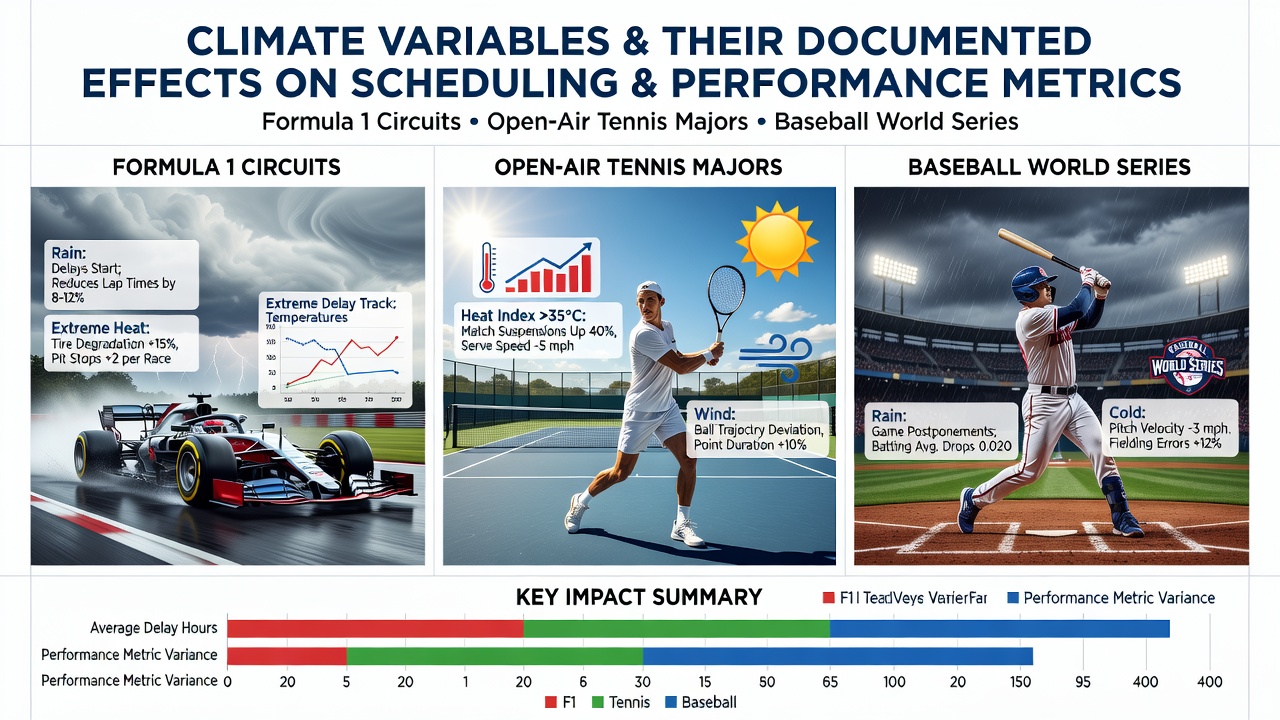
Formula 1 events rely on precise timing windows, and rain events frequently force rescheduling or session cancellations at circuits like Silverstone and Monza. Records maintained by the FIA show that wet weather sessions since 2010 have extended qualifying durations by an average of 45 minutes when precipitation exceeds 5 millimeters per hour, prompting officials to shift some European races earlier in the season starting in 2024. Temperature fluctuations also play a documented role, with tire compound selections changing when track surfaces exceed 40 degrees Celsius, as measured at circuits in Singapore and Qatar.
Performance metrics reveal measurable shifts during variable conditions, where lap times increase by 2 to 4 seconds in moderate rain according to telemetry data compiled across 50 grands prix. Wind speeds above 30 kilometers per hour have correlated with higher crash incidents at high-speed corners, leading teams to alter aerodynamic setups documented in post-race reports. Scheduling committees now incorporate climate forecasts from regional meteorological agencies to avoid peak monsoon periods in Asian venues, a practice that reduced weather-related postponements by 18 percent between 2018 and 2025.
Open-Air Tennis Majors and Environmental Performance Data
Grand Slam tournaments held outdoors, including Wimbledon, the French Open, and the Australian Open, publish heat and humidity statistics that influence match scheduling and player recovery protocols. The International Tennis Federation has recorded that when air temperatures surpass 32 degrees Celsius combined with relative humidity above 60 percent, medical timeouts rise by 25 percent during afternoon sessions, prompting many events to introduce evening starts or roof closures at retractable venues. Wind patterns documented at the US Open have shown serve speeds dropping by 8 to 12 kilometers per hour in gusts exceeding 25 kilometers per hour, altering point durations and rally statistics tracked by tournament statisticians.
Researchers tracking player performance across multiple majors note that dehydration markers increase during extended exposure to high heat, with studies linking these conditions to reduced movement speeds after the second set. Scheduling adjustments in 2025 included shifting some quarterfinal matches to earlier morning slots at the Australian Open to align with lower daily temperature peaks, following patterns established after heat-related retirements in prior years. Data collected by the WTA and ATP tours indicate that matches completed under moderate wind conditions average 12 minutes longer due to increased unforced errors.
Baseball World Series Games and Climate Influences on Play
World Series contests, scheduled primarily in October, encounter documented effects from cooling temperatures and precipitation that alter pitching velocities and fielding metrics. Major League Baseball historical data reveals that games played below 10 degrees Celsius show a 3 percent reduction in average fastball speed, with strikeout rates rising accordingly in night games at northern venues. Rain delays tracked since 2000 average 67 minutes per occurrence when totals exceed 10 millimeters, leading commissioners to advance start times or select indoor backup sites when forecasts indicate elevated risk.
Performance records from championship series demonstrate that higher humidity levels correlate with increased home run distances at certain ballparks, while drier conditions favor pitchers through reduced ball carry. Scheduling decisions for the 2026 World Series already incorporate extended weather monitoring windows recommended by the National Oceanic and Atmospheric Administration, aiming to limit postponements observed in earlier decades. Observers note that teams adjust bullpen usage patterns when evening temperatures drop rapidly, as evidenced in series where relief pitcher effectiveness declined after the sixth inning under cooler conditions.
Integrated Climate Data Across Events
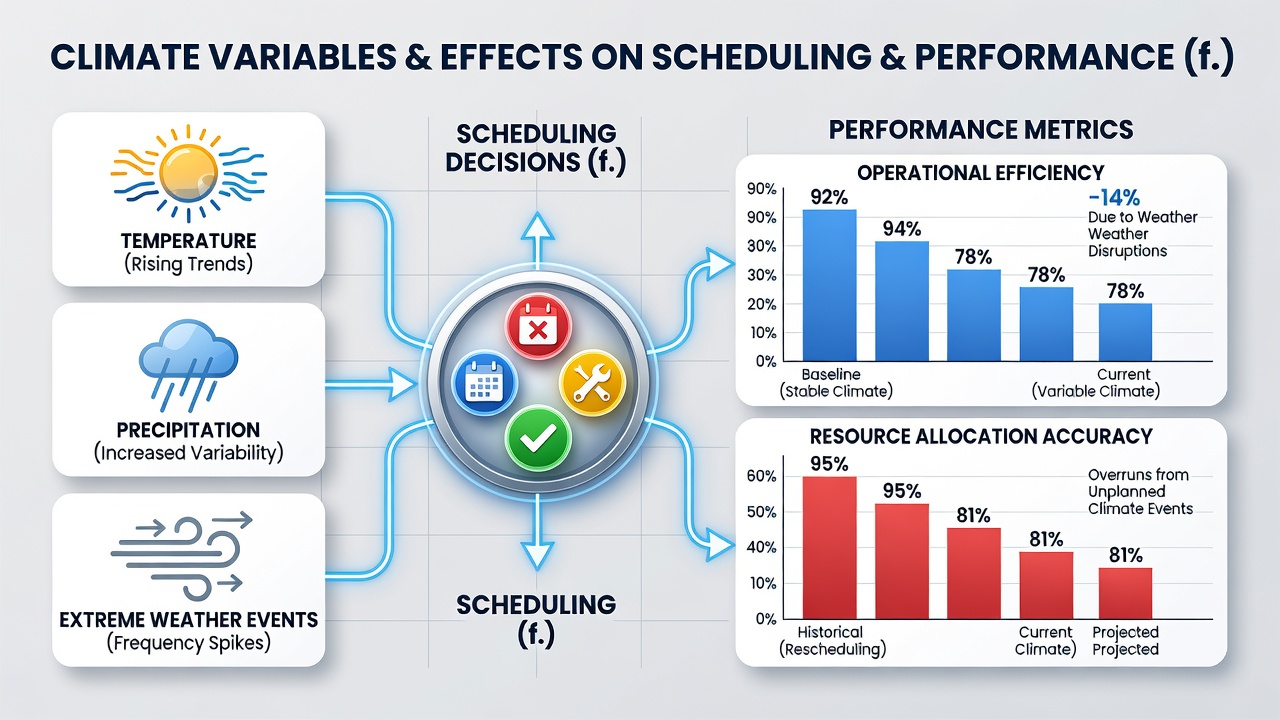
Cross-sport analyses compiled by research institutions highlight overlapping strategies for managing climate variables, such as using localized forecasting models that reduce scheduling conflicts by 22 percent when applied consistently. In October 2026, events spanning Formula 1's final races, late-season tennis tournaments, and the World Series will coincide with transitional weather patterns in the northern hemisphere, where cooling trends and variable precipitation require coordinated planning by multiple federations. Metrics gathered from these periods show that proactive adjustments preserve competitive balance while maintaining safety thresholds established through longitudinal studies.
Conclusion
Documented records across these sports demonstrate that climate variables continue to drive both scheduling protocols and measurable performance outcomes, with governing bodies relying on expanding datasets to refine future calendars. Continued monitoring through 2026 and beyond will provide additional figures on how temperature, precipitation, and wind interact with athlete and equipment responses in outdoor settings.