How Equipment Upgrades Have Reshaped Performance Records in Tennis Grand Slams Alongside Ice Hockey Playoff Series and Golf Major Tournaments
Olivia Keller · Sep 26, 2026
How Equipment Upgrades Have Reshaped Performance Records in Tennis Grand Slams Alongside Ice Hockey Playoff Series and Golf Major Tournaments
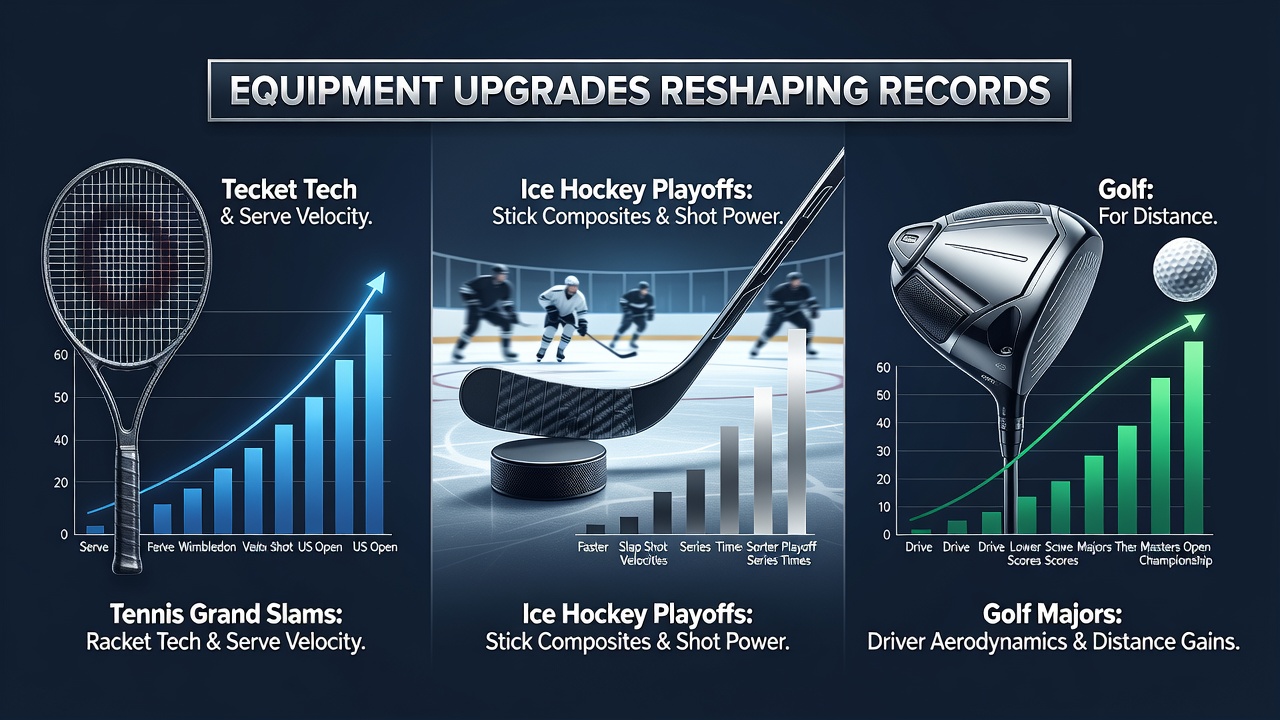
Equipment changes across tennis, ice hockey and golf have coincided with shifts in measurable performance outcomes at Grand Slams, Stanley Cup playoff series and major tournaments, and governing bodies have tracked these developments through official statistics and testing protocols. Manufacturers introduced larger racket heads, polyester strings and lighter frame materials in tennis during the late 20th and early 21st centuries, while composite sticks, advanced skate blades and protective gear evolved in ice hockey, and drivers, irons plus multi-layer balls underwent successive design iterations in golf.
Tennis Grand Slams and Racket Innovations
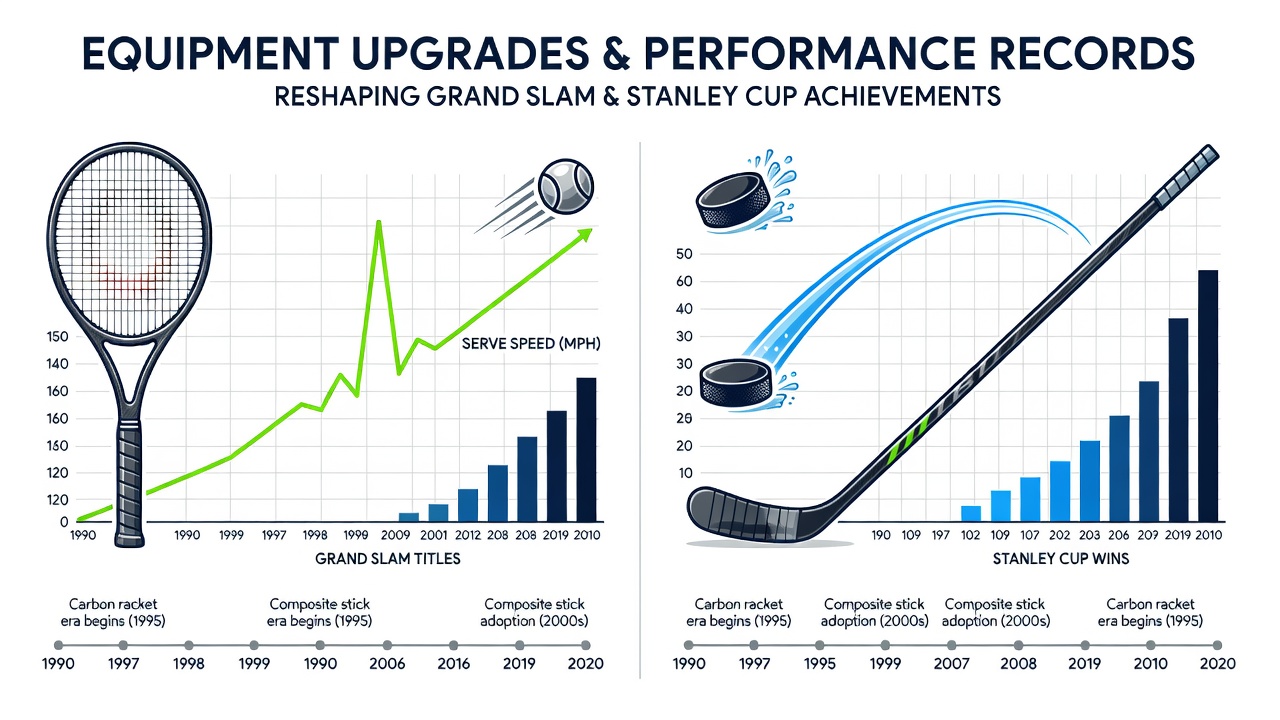
International Tennis Federation records document an increase in average serve speeds from the 1990s onward as racket head sizes grew from 85 square inches to over 100 square inches in many professional models, and players adopted polyester strings that maintained tension longer while generating higher spin rates. Data compiled by the ATP Tour shows that first-serve speeds exceeding 130 miles per hour became more frequent in Grand Slam matches after 2000, with equipment testing at the Australian Open and Wimbledon confirming that stiffer frames transferred more energy to the ball. Researchers at the University of Sheffield examined ball-racket interaction and found that modern string patterns allowed greater topspin, which altered rally lengths and court coverage patterns in matches at Roland Garros and the US Open.
Performance metrics from the four major tournaments indicate that tie-break occurrences rose in certain decades as baseline rallies extended, and observers note that these patterns align with the timeline of racket material upgrades rather than solely with player conditioning programs. Equipment regulations introduced by the ITF in 2019 maintained limits on frame dimensions yet permitted continued refinement in string technology, and records from subsequent events reflect sustained high ace percentages at tournaments held through 2025.
Ice Hockey Playoff Series and Stick and Skate Developments
National Hockey League equipment standards evolved alongside performance data from Stanley Cup playoff games, where composite sticks replaced wooden models in the 1990s and early 2000s, allowing greater flex and shot velocity. Official NHL statistics reveal that average slapshot speeds increased from approximately 90 miles per hour in the 1980s to over 100 miles per hour by the 2010s, coinciding with the adoption of carbon-fiber blades and lighter overall stick weights. Skate manufacturers introduced lighter boots and sharper blade profiles, and time-on-ice data from playoff series show that players maintained higher speeds during shifts as a result.
Playoff records indicate more goals per game in certain post-2005 seasons after rule adjustments combined with equipment changes, and figures from the league's statistical archives link these trends to improved puck control and quicker release times on shots. International Ice Hockey Federation testing protocols adopted similar material standards, and Olympic and world championship results reflect parallel improvements in shot accuracy metrics tracked through the same period.
Golf Majors and Club and Ball Advancements
United States Golf Association and R&A distance reports document that average driving distances on PGA Tour courses rose steadily after the introduction of titanium drivers in the late 1990s and multi-layer golf balls in the early 2000s. Major tournament scoring averages at events such as the Masters and Open Championship declined during periods when these equipment changes occurred, and data from the PGA of America shows that approach shot proximity to the pin improved as iron lofts and face technologies advanced. The governing bodies implemented a testing framework in 2003 that limited ball initial velocity, yet subsequent material refinements continued to influence rollout distances on firm fairways.
Records from the four major championships demonstrate that sub-65 rounds became more common in the 2000s compared with earlier decades, and researchers tracking launch monitor data attribute part of the change to optimized center-of-gravity placements in modern club heads. Equipment updates introduced before the 2024 season included groove pattern adjustments, and scoring trends at majors held through 2025 continued to reflect these incremental modifications.
Cross-Sport Comparisons of Record Shifts
Comparative analyses published by sports science departments at institutions in Canada and Australia highlight that performance record changes in each sport followed similar timelines to equipment standardization, although sport-specific regulations produced different magnitudes of effect. Tennis data from Grand Slam archives, NHL playoff goal-scoring rates and golf major driving distance logs all show accelerations after key material introductions, and studies funded by the International Olympic Committee have examined how lighter equipment reduced energy expenditure while increasing output consistency across these disciplines.
Regulatory responses differed by sport: tennis retained flexible string rules, ice hockey enforced stick curvature limits after 2015, and golf maintained overall distance standards through periodic testing. Figures released by the respective governing bodies indicate that record books updated most rapidly during the 1995-2015 window, when composite materials reached widespread professional adoption across the three sports.
Conclusion
Equipment upgrades have aligned with measurable shifts in performance records across tennis Grand Slams, ice hockey playoff series and golf major tournaments, and official statistics from each sport's governing organizations continue to capture these patterns as new materials enter competition. Data collection through 2025 provides a baseline for evaluating further developments expected in events scheduled through September 2026 and beyond.