How Venue Acoustics and Crowd Noise Levels Have Shaped On-Field Communication in Super Bowl Contests and World Series Games
Olivia Keller · Oct 24, 2026
How Venue Acoustics and Crowd Noise Levels Have Shaped On-Field Communication in Super Bowl Contests and World Series Games
Stadium design and crowd dynamics create distinct sound environments that alter how players exchange signals during championship play, and researchers have documented measurable effects across decades of Super Bowl contests and World Series games. Data from acoustic monitoring shows that sustained noise levels above 100 decibels force quarterbacks and catchers to shift from verbal calls to visual or pre-snap adjustments, while reverberation patterns in enclosed or partially covered venues extend sound decay times and mask critical instructions.
Documented Effects in Super Bowl Settings
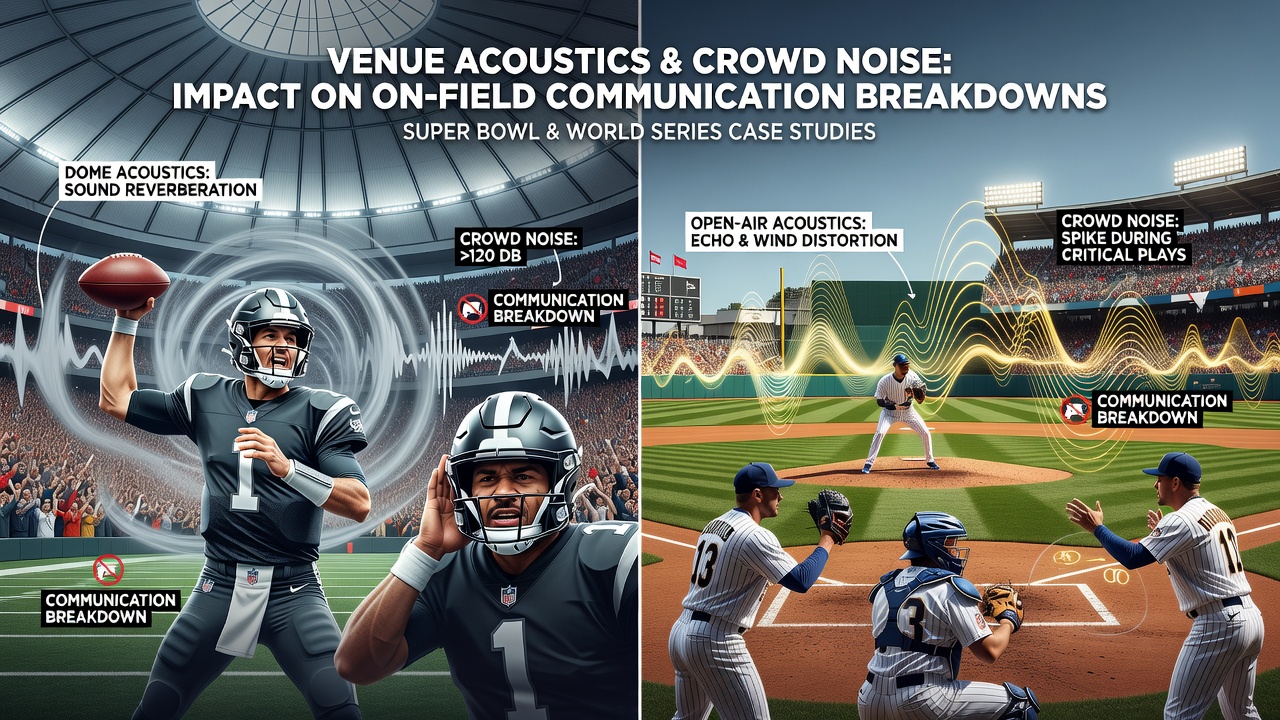
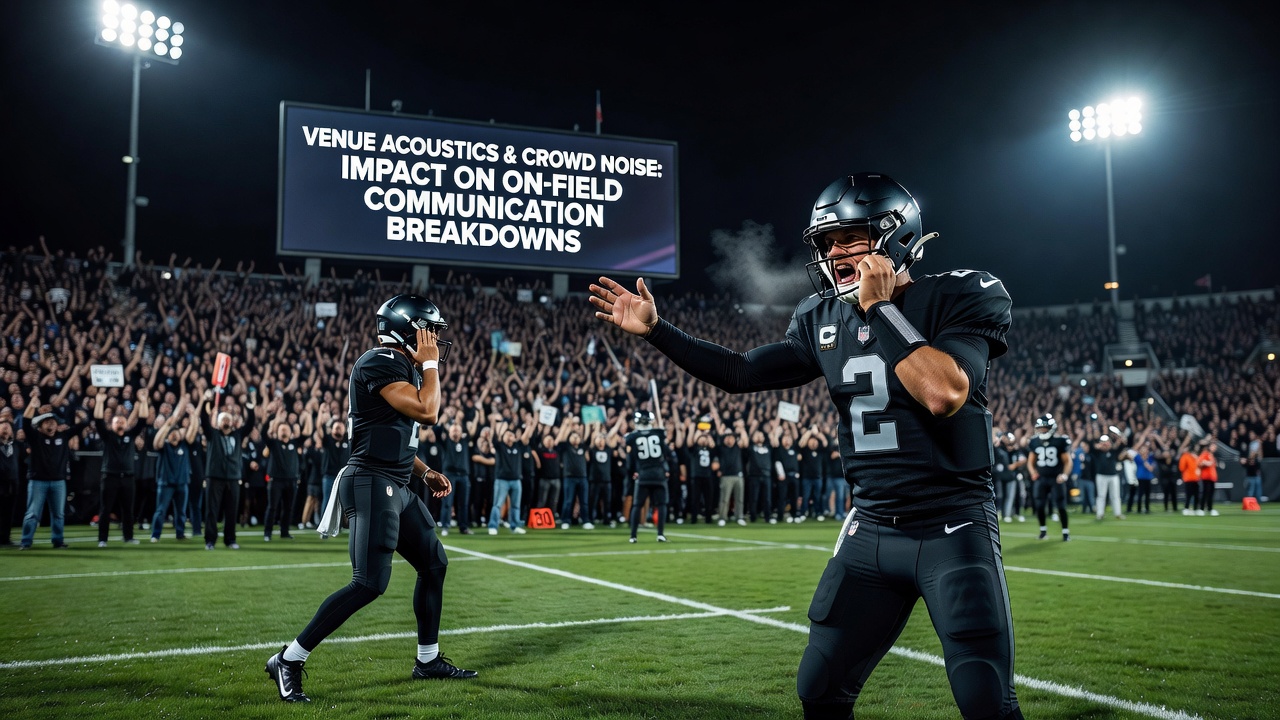
Super Bowl venues such as the Superdome and Lucas Oil Stadium have recorded peak crowd volumes that exceed 110 decibels during critical downs, and NFL game logs indicate repeated instances where offensive linemen missed snap counts because opposing fans coordinated sustained cheering sections. In one noted contest, the visiting team's center failed to register a color-coded audible change after the quarterback's voice was absorbed by the domed ceiling's reflective surfaces, resulting in a delay-of-game penalty that shifted field position. League statistics compiled over multiple seasons reveal that teams playing in high-reverberation indoor facilities commit more pre-snap penalties than those in open-air sites, with the difference attributed to prolonged echo tails that overlap subsequent play calls.
Coaches responded by installing silent count systems that rely on visual cues from the quarterback's heel or hand signals, yet these adaptations still encounter limits when stadium lighting interacts with reflective surfaces and creates momentary visual obstructions. Observers note that the combination of concrete construction and metal seating amplifies low-frequency crowd roars, which travel farther and interfere with helmet-mounted communication devices used by defensive coordinators.
Patterns Observed Across World Series Games
Baseball stadiums present different acoustic profiles because many World Series venues remain open-air structures, although retractable-roof parks like Minute Maid Park and Chase Field alter sound behavior when closed. Historical pitch charts and umpire reports show that catchers have called for mound visits more frequently when crowd noise masks pitch selection signals during late innings, and data from MLB tracking systems indicate that catcher-to-pitcher communication errors correlate with attendance figures above 45,000 in enclosed configurations. One documented sequence in a World Series contest involved a catcher flashing multiple sign sequences because the initial sequence was lost beneath a wave of cheering that reflected off the roof panels, forcing the pitcher to step off the rubber and reset the sequence.
Outdoor ballparks with steep grandstands, such as those in older Northeast venues, channel sound downward toward the infield, creating localized pressure zones that affect middle infielders attempting to relay defensive shifts. Researchers at institutions in both North America and Europe have measured these directional sound patterns, and their findings link specific seating geometries to increased rates of miscommunication on bunt defenses and pickoff attempts.
Technical Factors Driving Communication Breakdowns
Acoustic modeling conducted by engineering teams demonstrates that hard surfaces in modern stadiums produce reverberation times exceeding two seconds, which overlaps spoken words and forces players to extend signal duration or repeat gestures. Helmet microphones used in football and earpieces worn by catchers encounter frequency clipping when ambient levels surpass their noise-gate thresholds, and maintenance logs from equipment suppliers record higher failure rates during championship games with elevated attendance. In addition, wind patterns in open stadiums can carry or deflect verbal calls, while temperature inversions common in October contests trap sound near the playing surface and intensify its impact on nearby players.
Studies compiled by academic groups in Canada and Australia have examined how these environmental variables interact with uniform materials and helmet designs, revealing that darker-colored jerseys absorb certain sound frequencies differently than lighter ones and can subtly alter how teammates perceive shouted instructions from the sideline. Although such effects remain secondary to raw decibel counts, they contribute to cumulative communication strain during extended championship series.
Adaptations Implemented by Teams and Leagues
League offices have introduced rules permitting additional timeouts for communication resets in documented high-noise environments, and teams now employ pre-loaded wristbands that display play numbers without requiring verbal confirmation. Training regimens incorporate simulated crowd audio calibrated to match historical venue recordings, allowing players to practice lip-reading and hand-signal recognition under controlled conditions that replicate the acoustics measured at prior Super Bowls and World Series sites.
Facility operators have added sound-absorbing panels and directional speaker arrays in some venues to reduce unwanted reflections, yet these modifications must balance fan experience with competitive equity. Data collected after such installations shows modest reductions in pre-snap penalties, although the improvements vary according to the specific architectural constraints of each stadium.
Conclusion
Venue acoustics and crowd noise continue to influence on-field communication across Super Bowl contests and World Series games through measurable interactions between architecture, audience behavior, and equipment design. Records maintained by professional leagues and independent acoustic analyses demonstrate consistent patterns of signal disruption that teams address through technological and procedural adjustments, while ongoing research from multiple geographic regions refines understanding of how specific stadium features shape these outcomes.