Shifts in Sponsorship Funding Patterns Across Decades of Formula 1 Races Alongside UFC Title Bouts
Theo Perry · Aug 24, 2026
Shifts in Sponsorship Funding Patterns Across Decades of Formula 1 Races Alongside UFC Title Bouts
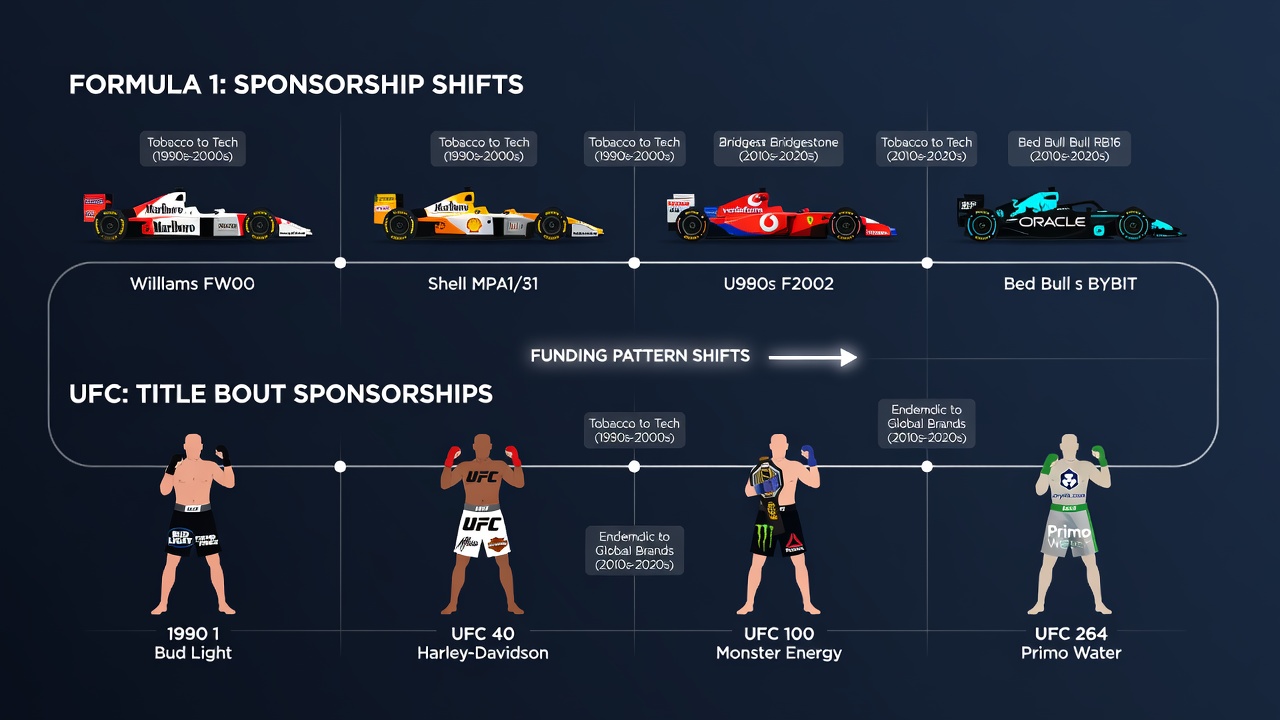
Sponsorship funding in Formula 1 has moved through distinct phases since the championship began in 1950, while UFC title bouts have shown their own progression since the organization's first events in 1993. Both series experienced changes driven by regulatory restrictions, market expansions, and shifts in corporate marketing priorities, with funding sources adapting to new global audiences and media platforms.
Early Formula 1 Sponsorship Landscape
Teams in the 1950s and 1960s relied primarily on manufacturer support and national oil companies, yet tobacco brands entered prominently during the 1970s as television coverage expanded. Data from motorsport archives shows that by the mid-1980s, cigarette logos covered large portions of car surfaces, a pattern that continued until European Union advertising bans took effect in the early 2000s. Observers note that these restrictions prompted teams to seek technology firms and automotive suppliers as replacements, with electronics companies increasing their presence through the 1990s and into the 2000s.
By the 2010s, hybrid power unit regulations aligned with sustainability messaging, which attracted energy and financial service brands. Figures from industry reports indicate that title sponsorship deals grew in value as broadcast rights expanded across Asia and the Middle East, creating new revenue streams that supplemented traditional trackside advertising.
UFC Sponsorship Development Timeline
The UFC operated with limited corporate backing in its initial years, depending on pay-per-view revenue and fighter pay structures. After the 2001 acquisition by Zuffa, sponsorship packages emerged around event production and fighter apparel. A major shift occurred in 2015 when an exclusive apparel agreement with Reebok standardized fighter uniforms, according to records from the Nevada State Athletic Commission. This arrangement centralized branding and reduced individual fighter endorsement opportunities until its conclusion in 2020.
Post-2020, multiple partners filled the space across equipment, beverage, and technology categories. Title bouts at venues such as T-Mobile Arena and Etihad Arena now feature layered sponsorship integrations that combine in-octagon signage with digital activations. Research from combat sports analytics groups shows that average sponsorship revenue per numbered event rose steadily through the decade as international markets opened.
Parallel Funding Adjustments
Both series responded to tobacco and alcohol advertising limits by diversifying into sectors less affected by health regulations. Formula 1 teams pivoted toward luxury watchmakers and cryptocurrency platforms in certain markets, while UFC events incorporated betting operators and performance nutrition brands. What's interesting is how media rights values influenced these choices, since longer broadcast windows allowed for more integrated sponsor mentions during live coverage.
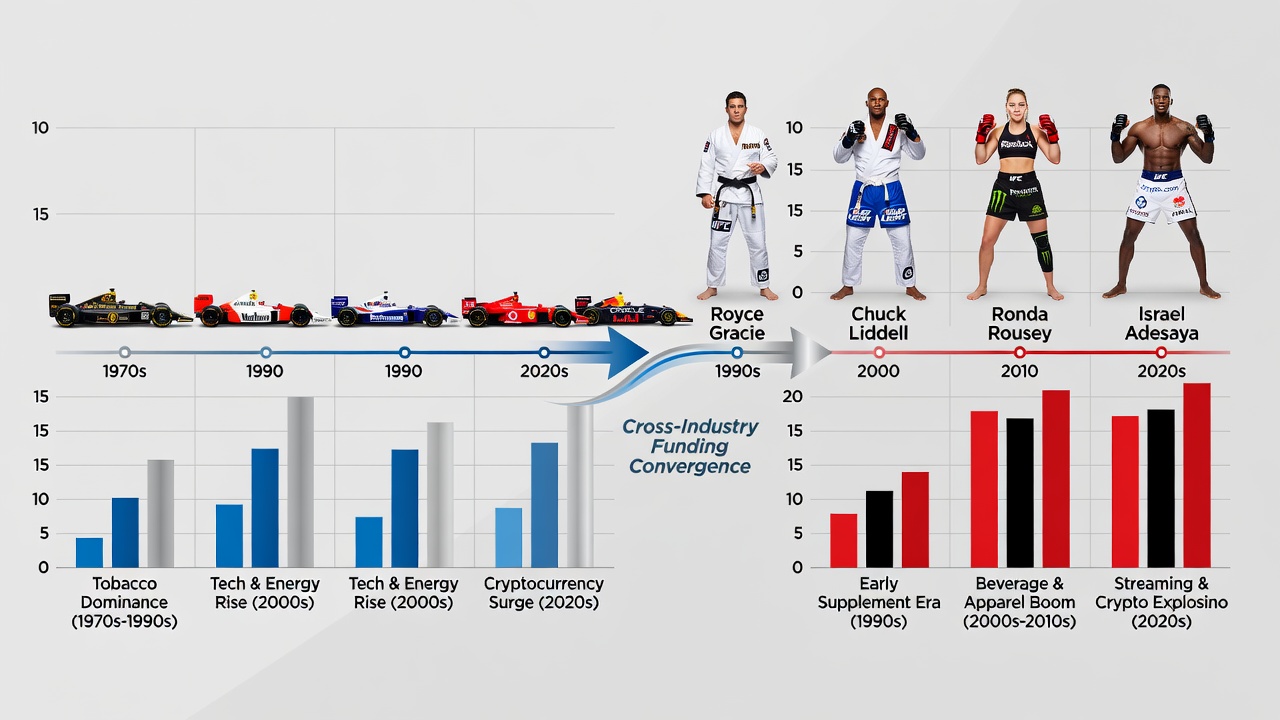
Regulatory bodies in different regions shaped outcomes. Australian competition authorities reviewed sports marketing practices in the 2010s, while Canadian provincial commissions monitored alcohol sponsorship visibility at combat events. European Union directives on gambling advertising also affected both series when events were held on the continent. Teams and promoters adjusted activation strategies accordingly, moving more emphasis to digital channels and hospitality programs that bypassed traditional signage restrictions.
Recent Patterns and 2026 Outlook
Current data indicates that Formula 1 title sponsors now include a higher proportion of technology and sustainability-focused companies compared with previous decades. Meanwhile, UFC title bouts feature rotating partners across weight classes, with deals structured around pay-per-view buys and merchandise lines. Industry organizations such as the Sports Business Journal have tracked these changes through annual valuation studies that separate on-site branding from media exposure metrics.
As the calendar moves toward events planned for August 2026, both series continue to test new partnership models that blend physical presence with augmented reality overlays. A report published by the European Sponsorship Association outlines how rights holders in motorsport and combat sports are exploring performance-based clauses tied to viewership numbers rather than fixed fees alone.
Conclusion
Decades of regulatory and market evolution have produced measurable shifts in how Formula 1 teams and UFC promoters secure funding. Tobacco dominance gave way to diversified corporate portfolios in both domains, while exclusive apparel contracts in mixed martial arts paralleled the move toward multi-year technical partnerships in grand prix racing. Available figures reveal consistent growth in total sponsorship values alongside geographic expansion, with future arrangements likely to incorporate more data-driven activation methods as global audiences continue to increase.